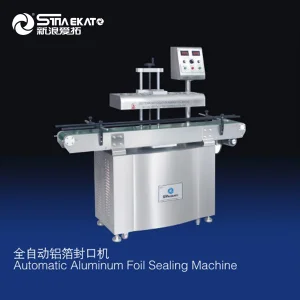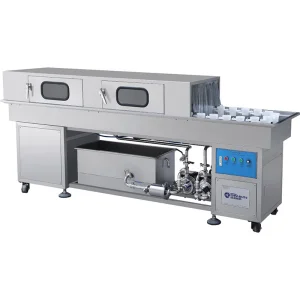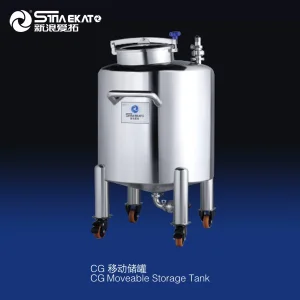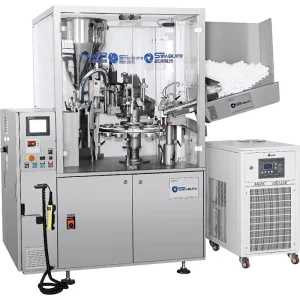
The Canadian cosmetic and personal care market, particularly in hubs like Toronto, Montreal, and Vancouver, is experiencing a shift toward "Clean Beauty" and organic formulations. This requires auxiliary equipment that can handle diverse viscosities and strictly maintain ingredient integrity. Our factory provides the precision homogenization needed for Health Canada-compliant manufacturing.
To enter the Canadian market, equipment must meet CSA standards and ASME pressure vessel codes. Our 316L stainless steel tanks and vacuum systems are designed for easy validation under ISO 22716 (GMP), ensuring your production line passes any Health Canada audit with zero downtime.
By leveraging China's advanced supply chain for raw component fabrication and combining it with Canadian localized electrical standards (60Hz/600V options), we offer a 30-40% cost advantage without compromising on North American technical specifications.
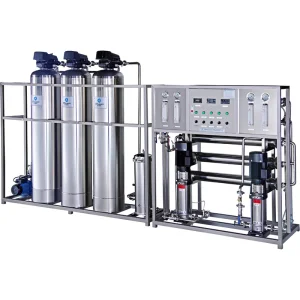
The Evolution of Auxiliary Equipment: In modern cosmetic manufacturing, "auxiliary" no longer means "secondary." Whether it is high-purity RO water treatment or precision tube sealing, these machines define the final product's shelf stability and aesthetic appeal. In the Canada market, labor costs are a significant driver toward Total Process Automation (TPA).
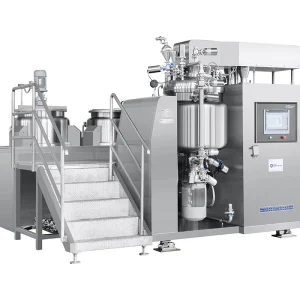
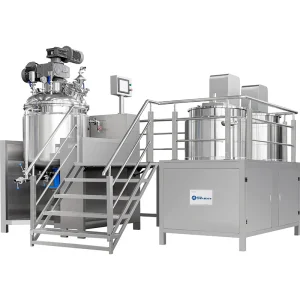
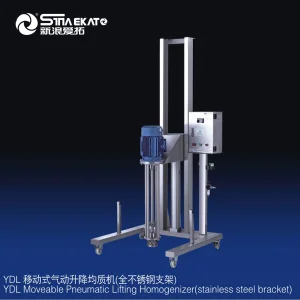
Information Gain: Why Vacuum Matters? Standard mixing often introduces micro-bubbles that lead to oxidation. Our vacuum emulsifying systems operate at -0.09Mpa, effectively degassing the product during the homogenization phase. This is critical for high-end serums and SPF creams being developed by Canadian "Indie" brands who demand premium quality.
Supply Chain Resilience: Our factory in China acts as a global hub. We don't just ship machines; we provide Information Gain through data-backed FAT (Factory Acceptance Testing) videos and digital twins of your production line. This allows Canadian engineers to simulate production before the equipment even leaves the port.
Sustainability Trends: Canadian consumers are increasingly eco-conscious. Our auxiliary equipment now includes energy-recovery steam generators and low-waste CIP (Clean-in-Place) systems that reduce water consumption by up to 25%—a vital factor for companies aiming for B-Corp certification in North America.
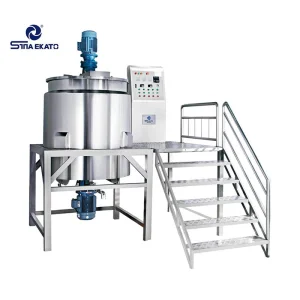
Compliance with Site Licensing requirements in Canada requires strictly controlled mixing environments. Our SME mixers are the gold standard for therapeutic ointments.
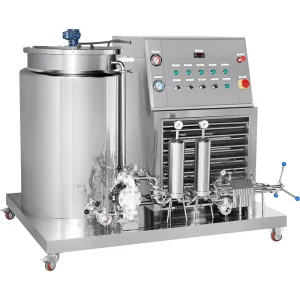
With Montreal's rich history in fragrance, our XS Series chillers and mixers provide the delicate temperature control needed for premium scent stabilization.
Our 5L-50L Lab-scale stirrers allow Canadian startups to transition from "kitchen-scale" to professional industrial production without reformulating.
① Mutual Communication (On-site visit if need)
② Professional Design
③ Technical Confirmation
④ Sign PI & Contract
⑤ Production – Cutting & Welding & Installation
⑥ Testing Video & FAT In Factory
⑦ Export Wooden Packing
⑧ Shipping by Sea or Air
⑨ Installation Assistance (By video or On-site)
Factory & Sales Center
Regional Office
Operations Center
Installation Assistance
Yes. All equipment exported to Canada is customized with compatible motors (Siemens/ABB) and PLC systems (Delta/Schneider) to match local voltage and frequency requirements.
We provide 24/7 remote technical support and have partner engineering teams for on-site installation and maintenance across Ontario, Quebec, and British Columbia.
Absolutely. We provide full material certification for all product contact parts, ensuring compliance with global cosmetic and pharmaceutical hygiene standards.
Standard machines take 30-45 days, while customized high-capacity lines take 60-90 days, followed by sea freight to major Canadian ports.
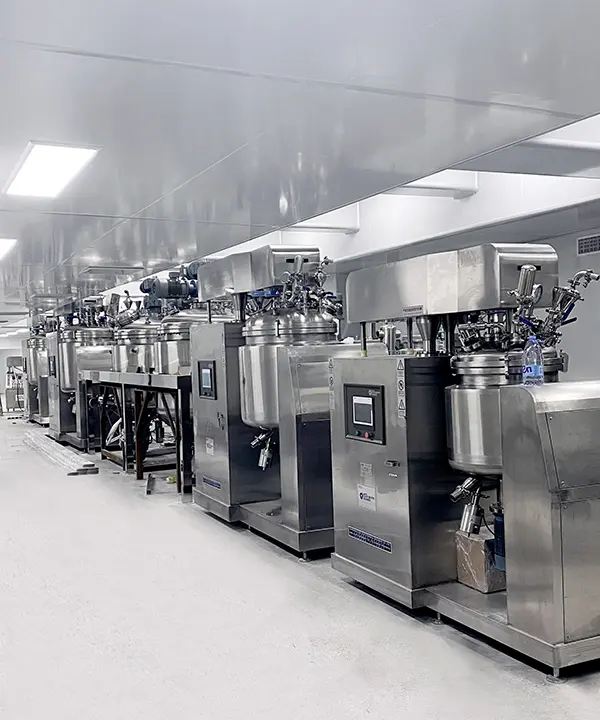
UK High-End Skincare
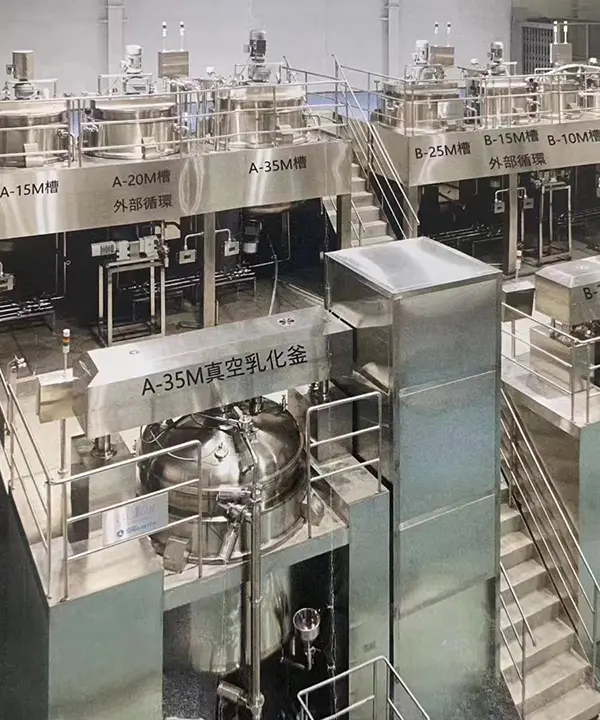
Japan Pharmaceutical Mixer
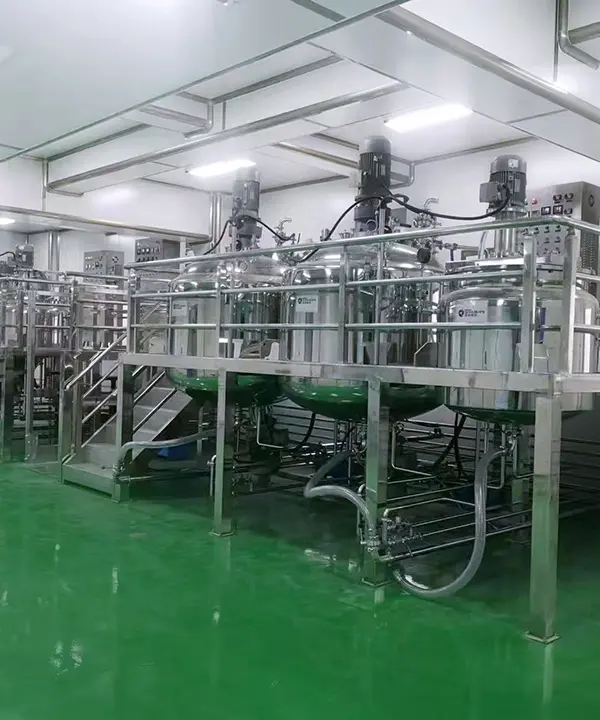
Dubai Luxury Fragrance
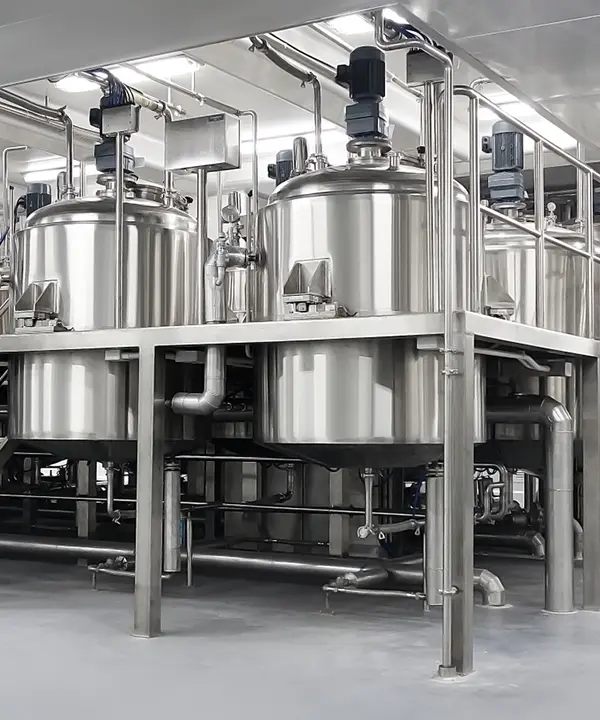
Belgium Shampoo Line
Supporting major projects in USA, France, Algeria, and across the Canada personal care sector.
View Detailed Case Studies